
Odoo works best for an SME when it connects one real workflow—not when every app is installed at once. Start where money or information is currently getting lost, then expand after the team is comfortable.
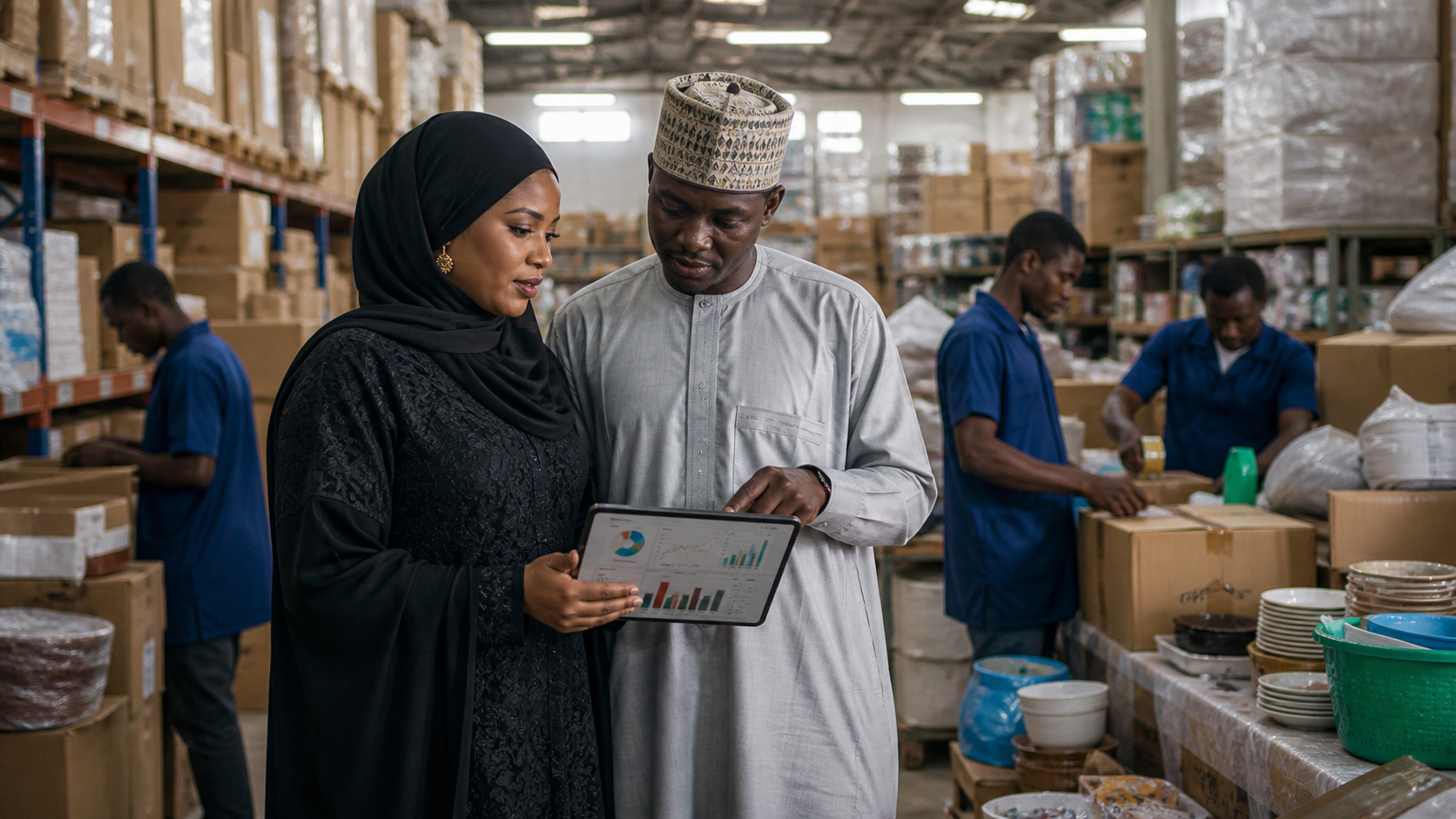
Consider Amina, who distributes home goods from Bompai, Kano, to retailers in Kano and Kaduna. Orders arrive through calls and WhatsApp. Sales promises one quantity, the storekeeper sees another, and finance invoices days later. Her problem is not “lack of software”; it is a broken handover.
Map the workflow before configuring Odoo
Write the steps from enquiry to payment. Identify who owns each step, what approval is needed and what information must move forward. Then configure the system around that agreed process.
Enquiry → Quotation → Sales order → Delivery → Invoice → Payment
Which Odoo apps should an SME start with?
Many businesses can begin with CRM, Sales and Invoicing. Add Purchase and Inventory when procurement and physical stock genuinely need control. A service company may need Projects or Timesheets instead. The right setup depends on the operation.
Train people by role
Amina’s salesperson needs to create accurate quotations. The storekeeper needs to confirm receipts and deliveries. Finance needs to reconcile invoices and payments. Do not force everybody through a generic tour of twenty modules.
Review five numbers every week
Track open quotations, confirmed orders, overdue deliveries, unpaid invoices and slow-moving items. These numbers turn Odoo from a data-entry burden into a management tool.
FAQ
Is Odoo too big for a small business?
It can be too much if poorly scoped. A small, disciplined implementation can be simpler than juggling separate spreadsheets, chats and accounting tools.
Should we customise immediately?
Usually not. Use standard workflows first, document genuine gaps, and customise only where the operational value is clear.
Build the business, then build the system.
TSM House helps Nigerian founders organise operations, technology and growth around the reality of their teams.